






















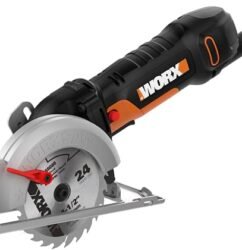

Circular Saw vs Reciprocating Saw: Which One Do You Need?


Choosing the right power saw can make a DIY project faster, easier, and much more enjoyable. But if you are building your first tool collection, two saws can be especially confusing: the circular saw and the reciprocating saw.
At first glance, both are powerful cutting tools designed to make quick work of wood and other materials. In practice, however, they are built for very different jobs.
A circular saw is generally designed for controlled, relatively straight cuts. A reciprocating saw, on the other hand, is built around versatility, access, and fast cutting in situations where precision is not always the priority.
So, which one should you buy?
The answer depends less on which tool is “better” and more on what you plan to cut, how accurately you need to cut it, where you will be working, and what types of projects you regularly tackle.
In this guide, we will compare circular saws and reciprocating saws in detail, explain their strengths and limitations, and help you decide which tool makes more sense for your workshop, home improvement projects, or DIY toolkit.
Circular Saw vs Reciprocating Saw at a Glance
Before going into the details, here is the simplest way to understand the difference:
| Feature | Circular Saw | Reciprocating Saw |
|---|---|---|
| Primary purpose | Straight and controlled cutting | Fast, flexible cutting |
| Blade movement | Rotating circular blade | Back-and-forth blade |
| Straight cuts | Excellent | Moderate |
| Demolition | Good | Excellent |
| Wood cutting | Excellent | Very good |
| Metal cutting | Possible with suitable blade | Very good with suitable blade |
| Pruning | Not ideal | Excellent with pruning blade |
| Cutting pipes | Limited | Excellent |
| Precision | High | Moderate |
| Tight spaces | Limited | Excellent |
| Beginners | Easy with practice | Relatively easy to handle |
| Portability | Excellent on cordless models | Excellent on cordless models |
| Best for | Construction, woodworking, sheet materials | Demolition, remodeling, plumbing, pruning |
The table gives you the basic answer, but there is much more to consider before choosing one.
What Is a Circular Saw?
A circular saw uses a round blade that rotates rapidly to cut through a material.
The blade is typically positioned beneath a protective guard, while a base plate helps the user guide the saw across the workpiece.
Circular saws are particularly useful when you need a long, relatively straight cut.
They are widely used for applications such as:
- Cutting lumber
- Cutting plywood
- Framing
- Deck construction
- Woodworking
- Home renovation
- Building furniture
- Sheet-material cutting
- Crosscuts
- Rip cuts
- Bevel cuts
The design of a circular saw makes it particularly useful when the direction of the cut matters.
If you need to cut a board from one end to another while maintaining a reasonably straight line, a circular saw is usually the more natural choice.
What Is a Reciprocating Saw?
A reciprocating saw uses a narrow blade that moves rapidly back and forth.
Unlike a circular saw, it does not depend on a large rotating blade. Instead, the user can select different blade types depending on the material being cut.
This gives the reciprocating saw a major advantage: versatility.
With the appropriate blade, a reciprocating saw can be used for:
- Wood
- Plastic
- PVC
- Metal
- Drywall
- Tree branches
- Pipes
- Construction materials
- Demolition work
The tool is especially useful when you need to make a cut quickly or reach an awkward location.
It is often associated with demolition and remodeling because it can cut through materials without requiring the same level of setup as a traditional precision saw.
The Biggest Difference: Precision vs Versatility
If you remember only one thing from this comparison, remember this:
Circular saw = controlled cutting.
Reciprocating saw = flexible cutting.
That does not mean a reciprocating saw cannot make a straight cut or that a circular saw cannot be used for demolition.
It simply means each tool is optimized for a different style of work.
A circular saw is generally the better choice when your priority is a predictable cutting path.
A reciprocating saw is generally the better choice when access, speed, flexibility, or demolition capability matters more.
Which Saw Is Better for Straight Cuts?
Winner: Circular Saw
Suppose you have a long wooden board and want to cut it in a straight line.
A circular saw is designed for this type of task.
Its base plate gives you a stable platform, while the rotating blade follows the path you establish.
With an appropriate guide, you can achieve even more consistent results.
A reciprocating saw can certainly cut wood, but maintaining a perfectly straight line over a long distance is more difficult.
The blade moves back and forth and is much less suited to precision-guided cuts.
Best choice for:
- Plywood
- Lumber
- Boards
- Long cuts
- Rip cuts
- Crosscuts
- Construction projects
- Woodworking
If accuracy matters, reach for the circular saw.
Which Saw Is Better for Demolition?
Winner: Reciprocating Saw
Demolition is where the reciprocating saw really shines.
When removing old framing, cutting through pipes, dismantling materials, or opening sections of a wall, you often do not need a perfectly straight cut.
You need a tool that can get into the material and cut quickly.
The narrow blade of a reciprocating saw can be useful in areas where a circular saw would be difficult or unsafe to position.
For example, during remodeling, you may need to cut through an old pipe close to a wall.
A reciprocating saw can often be much easier to position for that kind of work.
Which Saw Is Better for Cutting Wood?
It Depends on the Job
Both tools can cut wood effectively, but they approach the job differently.
Choose a circular saw when:
- You need straight cuts
- You are cutting boards
- You are cutting plywood
- You are building a deck
- You are framing
- You want repeatable cuts
Choose a reciprocating saw when:
- You are dismantling wooden structures
- You are making rough cuts
- You need to cut in an awkward position
- You are removing old lumber
- Precision is less important
For woodworking and construction where accuracy matters, the circular saw generally has the advantage.
For rough cutting and demolition, the reciprocating saw is usually more practical.
Which Saw Is Better for Cutting Metal?
Often: Reciprocating Saw
With the correct blade, a reciprocating saw can be extremely useful for cutting metal components.
For example, it can be useful for:
- Metal pipes
- Metal studs
- Brackets
- Bolts
- Thin metal components
- Renovation work
However, blade selection is critical.
You should never assume that the blade supplied with a saw is suitable for every material.
A blade designed for wood is not the right choice for cutting metal.
A circular saw can also cut certain metals when equipped with an appropriate blade and when the tool is specifically suitable for that application.
But for general DIY versatility, the reciprocating saw is often easier to adapt to different cutting situations.
Which Saw Is Better for Cutting Pipes?
Winner: Reciprocating Saw
If you regularly work on plumbing or renovation projects, a reciprocating saw can be extremely useful.
The narrow blade allows you to work around pipes and other components where a large circular blade would be difficult to position.
For example, when replacing a section of PVC pipe, a reciprocating saw with a suitable blade can make the cutting process relatively quick.
The same principle applies to certain metal pipes when the appropriate blade and tool setup are used.
Which Saw Is Better for Tree Branches?
Winner: Reciprocating Saw
A circular saw is not the natural tool for pruning.
A reciprocating saw fitted with a suitable pruning blade can be much more practical.
The compact cutting area and flexible blade make it possible to work with branches in a variety of positions.
If outdoor pruning is one of your priorities, a cordless reciprocating saw can be particularly convenient because you do not have to manage an electrical cable around trees and landscaping.
However, always consider branch stability, tool control, overhead hazards, and the manufacturer’s recommendations before cutting.
Which Saw Is Better for Tight Spaces?
Winner: Reciprocating Saw
This is another major advantage of the reciprocating design.
A reciprocating saw uses a relatively narrow blade that extends from the front of the tool.
That can make it easier to reach locations where a circular saw cannot comfortably fit.
Examples include:
- Behind cabinets
- Around pipes
- Between framing members
- Inside renovation areas
- Near existing structures
- Difficult demolition locations
A circular saw needs sufficient clearance for its circular blade and base plate.
A reciprocating saw can be much more forgiving when working in confined areas.
Which Saw Is Easier for Beginners?
It Depends on the Project
Neither tool should be treated casually. Both are powerful cutting machines and require proper handling.
For someone learning basic woodworking, a circular saw can be relatively straightforward once the user understands how to support the material, guide the saw, and maintain proper control.
For demolition, a reciprocating saw can be easier to use because the objective is often simply to cut through a material rather than produce a highly accurate finished edge.
However, ease of use should never replace proper safety practices.
A beginner should learn:
- How to hold the tool correctly
- How to select the correct blade
- How to secure the material
- How to avoid hidden electrical wiring and plumbing
- How to use appropriate protective equipment
- How to follow the manufacturer’s instructions
Circular Saw vs Reciprocating Saw for DIY Home Projects
If you are a homeowner building a general-purpose tool collection, consider the projects you are most likely to perform.
Building shelves
Circular saw
You will likely need straight, controlled cuts.
Cutting plywood
Circular saw
A circular saw is generally much better suited to long, straight cuts in sheet material.
Removing old cabinets
Reciprocating saw
A reciprocating saw can help with rough cutting and dismantling.
Cutting tree branches
Reciprocating saw
Use a suitable pruning blade.
Cutting PVC pipes
Reciprocating saw
Its narrow blade can be useful in confined locations.
Building a wooden deck
Circular saw
Straight and repeatable cuts are important.
Demolishing an old wooden structure
Reciprocating saw
Fast rough cutting is often more useful than precision.
Cutting metal pipe
Reciprocating saw
Use an appropriate metal-cutting blade and follow safe operating procedures.
Cutting long boards
Circular saw
The design is better suited to this application.
Which One Should You Buy First?
If you are purchasing your first power saw, ask yourself one simple question:
What kind of work will I do most often?
If your projects involve construction, woodworking, furniture, decking, plywood, or long straight cuts, a circular saw is probably the better first purchase.
If your projects involve renovation, demolition, plumbing, pruning, rough cutting, or difficult access, a reciprocating saw may provide more practical versatility.
If your budget allows for both, owning both tools can give you a much more complete cutting setup.
They are not really competitors.
They are complementary tools.
Why Many DIYers Eventually Own Both
One of the biggest mistakes beginners make is trying to find one tool that can do everything.
Power tools are generally designed around particular types of work.
A circular saw is excellent at controlled cuts.
A reciprocating saw is excellent at flexible cuts.
Instead of asking which one replaces the other, think of them as two different tools in the same toolkit.
For example:
Circular saw:
Measure → mark → guide → make a straight cut.
Reciprocating saw:
Position → control → cut through the material.
That difference explains why experienced DIYers and tradespeople often keep both available.
Cordless Circular Saw vs Cordless Reciprocating Saw
If portability is important, you may be deciding between two cordless options.
Both eliminate the need for a power cable, but their roles remain different.
A cordless circular saw is convenient when you need to move around a construction site, backyard, garage, or workshop while making controlled cuts.
A cordless reciprocating saw provides similar freedom but is more focused on flexible cutting and demolition-style work.
Your existing battery platform may also influence the decision.
If you already own compatible cordless tools from a particular manufacturer, purchasing another tool that uses the same battery ecosystem can potentially reduce the cost of building your collection.
Always verify battery compatibility before purchasing a bare tool.
What About Blade Selection?
Blade choice can dramatically affect performance.
For circular saws, blade characteristics such as tooth count, material, diameter, and intended application can influence the quality and speed of a cut.
For reciprocating saws, blades are commonly selected according to the material and type of work.
You may find blades designed for:
- Wood
- Metal
- Demolition
- Pruning
- Plastic
- Mixed materials
A high-quality saw with the wrong blade can perform poorly.
A suitable blade can make a significant difference even when using a moderately priced tool.
For this reason, do not judge a saw only by the tool itself. Consider the blades you will need for your projects as part of the overall purchase.
Which Tool Offers Better Value?
Value depends on what you do.
A circular saw may offer excellent value for someone who frequently cuts lumber and sheet materials.
A reciprocating saw may provide greater value to a homeowner who regularly performs renovation, demolition, plumbing, or pruning work.
Instead of asking:
“Which saw is cheaper?”
Ask:
“Which saw will I actually use?”
A less expensive tool that solves your common problems can be a better purchase than a more expensive tool that spends most of its time in a storage cabinet.
A Simple Decision Guide
Still unsure?
Use this quick guide.
Choose a Circular Saw if you:
- Need straight cuts
- Work with plywood
- Cut lumber regularly
- Build decks
- Do woodworking
- Need repeatable cuts
- Want controlled cutting
Choose a Reciprocating Saw if you:
- Do demolition
- Cut pipes
- Remove old structures
- Prune branches
- Work in tight spaces
- Cut different materials
- Need a highly versatile cutting tool
Choose Both if you:
- Regularly tackle home renovation
- Have a growing workshop
- Work on construction projects
- Perform both precision and demolition work
- Want a versatile power-tool collection
Pros and Cons: Circular Saw
Advantages
- Excellent for straight cuts
- Effective for lumber and sheet materials
- Useful for woodworking and construction
- Can produce consistent cuts with proper technique
- Available in corded and cordless configurations
- Suitable for a wide range of cutting applications
Limitations
- Less suitable for tight spaces
- Not ideal for pruning
- Requires more careful setup for certain cuts
- Not the natural choice for demolition
- Blade size and design can limit certain applications
Pros and Cons: Reciprocating Saw
Advantages
- Highly versatile
- Excellent for demolition
- Useful for pipes and difficult areas
- Can cut wood, metal, plastic, and other materials with appropriate blades
- Excellent for pruning
- Works well in awkward locations
- Cordless versions offer excellent mobility
Limitations
- Less suitable for precision cutting
- Straight cuts can be more difficult
- Can produce significant vibration
- Blade selection is important
- Not designed to replace a dedicated circular saw for woodworking
Final Verdict: Circular Saw or Reciprocating Saw?
So, which one should you choose?
There is no universal winner.
Choose a circular saw if your priority is straight, controlled, repeatable cutting.
Choose a reciprocating saw if your priority is versatility, demolition, difficult access, pruning, or cutting different materials.
For a homeowner who mainly builds shelves, cuts plywood, works with lumber, or takes on woodworking projects, a circular saw is likely to be the more useful first purchase.
For someone who remodels homes, removes old materials, cuts pipes, prunes branches, or frequently works in awkward locations, a reciprocating saw may be the better choice.
And if you regularly tackle a mixture of all these projects, owning both can give you the flexibility to choose the right tool for each job.
The smartest approach is not to buy the most powerful saw you can find. Instead, choose the saw that matches the work you actually do.
Frequently Asked Questions
Is a circular saw better than a reciprocating saw?
Neither tool is universally better. A circular saw is generally better for straight and controlled cuts, while a reciprocating saw is more versatile for demolition, pruning, pipes, and difficult-to-reach areas.
Can a reciprocating saw replace a circular saw?
Not completely. A reciprocating saw can cut wood and other materials, but it is not designed to provide the same level of control and consistency for long, straight cuts.
Can a circular saw be used for demolition?
It can be used for certain demolition tasks, but a reciprocating saw is generally more convenient for rough cutting and dismantling because of its blade design and ability to work in tighter areas.
Which saw is better for plywood?
A circular saw is generally the better option for plywood when you need straight, controlled cuts. Using an appropriate blade and cutting technique can improve the result.
Which saw is better for cutting branches?
A reciprocating saw equipped with a suitable pruning blade is generally more practical for cutting branches than a circular saw.
Can a reciprocating saw cut metal?
Yes. With an appropriate metal-cutting blade, a reciprocating saw can cut many metal materials. Always verify that the blade and tool are suitable for the particular application.
Which saw should a beginner buy first?
The answer depends on the projects you expect to perform. For woodworking and straight cuts, start with a circular saw. For remodeling, demolition, pipes, and general rough cutting, a reciprocating saw may be more useful.
Do I need both a circular saw and a reciprocating saw?
If you regularly work on different types of DIY, construction, or renovation projects, owning both can be beneficial because they solve different cutting problems.
Related Guides
If you are building a versatile DIY toolkit, explore our other power-tool buying guides and product collections. You can also compare individual products in our Power Tools collection before making a purchase.
As you expand your toolkit, consider other useful categories such as drill bits, power-tool accessories, and additional cutting tools.
Disclosure: SmallEasyTools may earn a commission when you purchase products through qualifying affiliate links. This does not affect the price you pay and helps support the website.
Safety Note: Power tools can cause serious injury if used incorrectly. Always read the manufacturer’s instructions, use appropriate protective equipment, inspect the tool and blade before use, and make sure the material is securely supported before cutting.